
Why Is My Dog Licking Their Paws? Understanding Paw Irritation, Yeast, and Fungal Issues
- Pure Paws
- Jul 17
- 4 min read
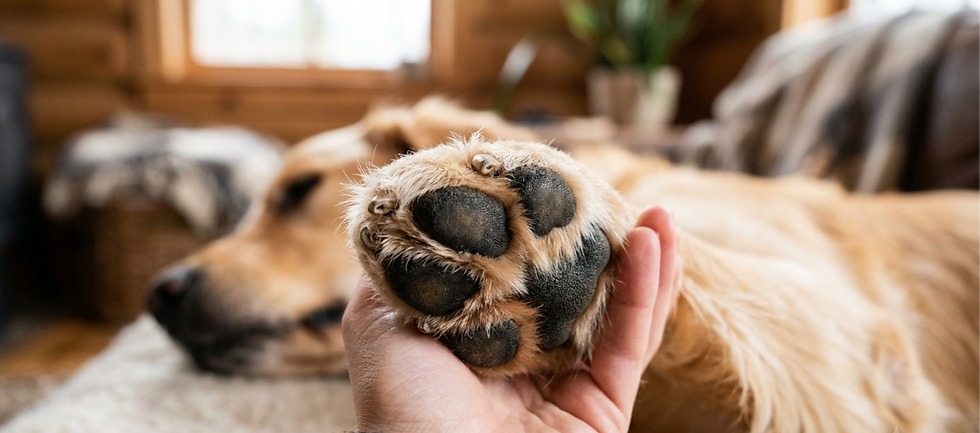
If your dog is constantly licking or chewing their paws, you may be wondering: “Is this normal?”
While the occasional paw lick is completely normal, frequent licking can be a sign that something is bothering your dog. Many pet parents assume it’s just a habit, but persistent paw licking may point to irritation, allergies, yeast overgrowth, fungal issues, or another underlying problem.
Your dog can’t tell you their paws hurt or feel uncomfortable — but they can show you through their behavior.
Signs Your Dog’s Paws May Need Attention
Pay attention if you notice your dog:
Licking or chewing their paws frequently
Redness between the toes or around the paw pads
Swelling or irritated skin
Brown staining on the fur from excessive licking
A musty or “corn chip” smell coming from the paws
Cracked or sore paw pads
Limping or avoiding putting pressure on a paw
These signs can mean your dog is experiencing discomfort and may need some extra attention.
What Causes Paw Licking in Dogs?
There are several reasons dogs may lick their paws. While fungal infections are one possibility, they are not the only cause.
Yeast or Fungal Overgrowth
Dogs naturally have microorganisms living on their skin, including yeast. When the skin’s natural balance is disrupted, yeast can multiply and cause irritation.
Common signs may include:
Red, itchy paws
Excessive licking
Odor
Brown discoloration from saliva
A veterinarian can help determine whether yeast or fungus is actually the cause and recommend appropriate treatment.
Allergies
Many dogs with recurring paw issues are dealing with allergies. Environmental allergies, such as grass, pollen, or dust, can cause itchy paws.
Dogs may lick their feet because they are trying to soothe the discomfort.
Environmental Irritation
Your dog’s paws come into contact with many things every day, including:
Lawn treatments
Cleaning products
Hot pavement
Dirt and debris
Chemicals on sidewalks
These irritants can cause paw discomfort even without an infection.
Small Injuries or Foreign Objects
A tiny cut, thorn, splinter, or irritated paw pad can make a dog focus on one specific paw.
Regular paw checks can help you catch these issues early.
My Experience With Paw Licking in My Own Dogs
As a pet parent, I’ve experienced this firsthand with my own dogs. Santi and Raph are the two in my pack who tend to lick their paws the most.
When they go through periods of excessive paw licking, I start by checking their paws carefully for anything unusual - redness, irritation, debris, or signs that something may be bothering them.
One thing I do at home is give them an Epsom salt soak. I’ve found that it can help soothe their paws when they are having a flare-up. However, it’s important to understand that an Epsom salt soak is not a cure for fungal or yeast infections. It may provide comfort, but it does not address the underlying cause of the paw irritation.
If paw licking continues or keeps coming back, it’s important to look deeper into what may
be causing it, such as allergies, environmental irritation, yeast, fungus, or another issue.
How to Help Prevent Paw Problems
While not every paw issue can be prevented, simple habits can help keep your dog’s feet
healthier.
Keep Paws Clean and Dry
Moisture trapped between the toes can create an environment where yeast and bacteria may thrive.
After walks, especially in wet grass or muddy areas:
Wipe your dog’s paws
Check between their toes
Dry thoroughly
Check Your Dog’s Paws Regularly
Make paw checks part of your routine. Look for:
Redness
Swelling
Odor
Cuts
Changes in your dog’s behavior
The sooner you notice changes, the easier it may be to address the problem.
Keep Paw Fur Trimmed
Dogs with longer fur between their paw pads can collect moisture and debris more easily. Keeping this area neat can help keep paws cleaner.
Pay Attention to Allergies
If your dog repeatedly develops paw problems, it may be worth discussing allergies or other underlying causes with your veterinarian.
Can You Treat a Fungal Infection at Home?
If your dog has a true fungal or yeast infection, the right treatment depends on the cause and severity.
Home remedies may provide temporary comfort, but they may not fix the underlying problem. Treating the wrong issue can allow symptoms to continue or return.
If your dog has:
Persistent licking
Pain
Swelling
Open sores
A strong odor
Repeated flare-ups
it’s best to have your veterinarian evaluate the paws.
How About Epsom Salt Soaks?
Many pet parents have heard about Epsom salt baths for irritated paws. A warm soak may feel soothing for some dogs, but it is not a proven cure for fungal or yeast infections.
If you choose to use an Epsom salt soak:
Use plain, unscented Epsom salt only
Prevent your dog from drinking the water
Dry paws completely afterward
Remember, soothing irritation is different from treating the root cause.
Your Dog’s Paws Deserve Attention
Paw licking may seem like a small behavior, but it can be your dog’s way of communicating that something doesn’t feel right.
Regular paw checks, keeping feet clean and dry, and paying attention to changes in behavior can help you catch problems early.
At Pure Paws, we believe better pet care starts with education. When you understand what your dog is trying to tell you, you can make better choices for their health and happiness.
🐾 Healthy pets start with informed pet parents.
Comments