
🐾 Why Your Dog Moves Food Away From Their Bowl (Caching Behavior Explained)

If you’ve ever watched your dog grab a bite of kibble, walk a few steps away from their bowl, drop it on the floor, and then eat it… you might have paused and thought:
“Why are they doing that?”
Or maybe your dog takes it even further—carrying food across the room like it’s a mission.
This behavior actually has a name: caching.
And it’s far more common (and normal) than most dog owners realize.
🐶 What is caching in dogs?
Caching is when a dog:
Picks up food or treats
Moves them away from their bowl
Drops or stores them somewhere else
Eats them later or in a different spot
It can look quirky, but it’s rooted in instinct.
In the wild, dogs’ ancestors would move or hide food to protect it from others and return to it later when it was safe. Even though modern dogs don’t need to “store” food anymore, that instinct can still show up in everyday behavior.
🧠 Why do dogs cache their food?
There isn’t just one reason—caching can come from a few different instincts or preferences:
🦴 1. Instinct to protect resources
Some dogs still carry the instinct to “secure” their food, even in a safe home environment.
🐕 2. Comfort and environment preference
Your dog might simply prefer eating somewhere else:
Softer flooring
Quieter space
Less foot traffic
A spot that feels safer
🧩 3. Enrichment or habit
For some dogs, moving food turns mealtime into a little “task.” It adds mental stimulation or becomes a learned habit over time.
🐾 4. Mild food guarding tendencies
Not necessarily aggression—just preference for separating food from the bowl area.
🐶 Real-life example: Mozzi & MJ
We see this behavior play out in completely different ways with our own dogs.
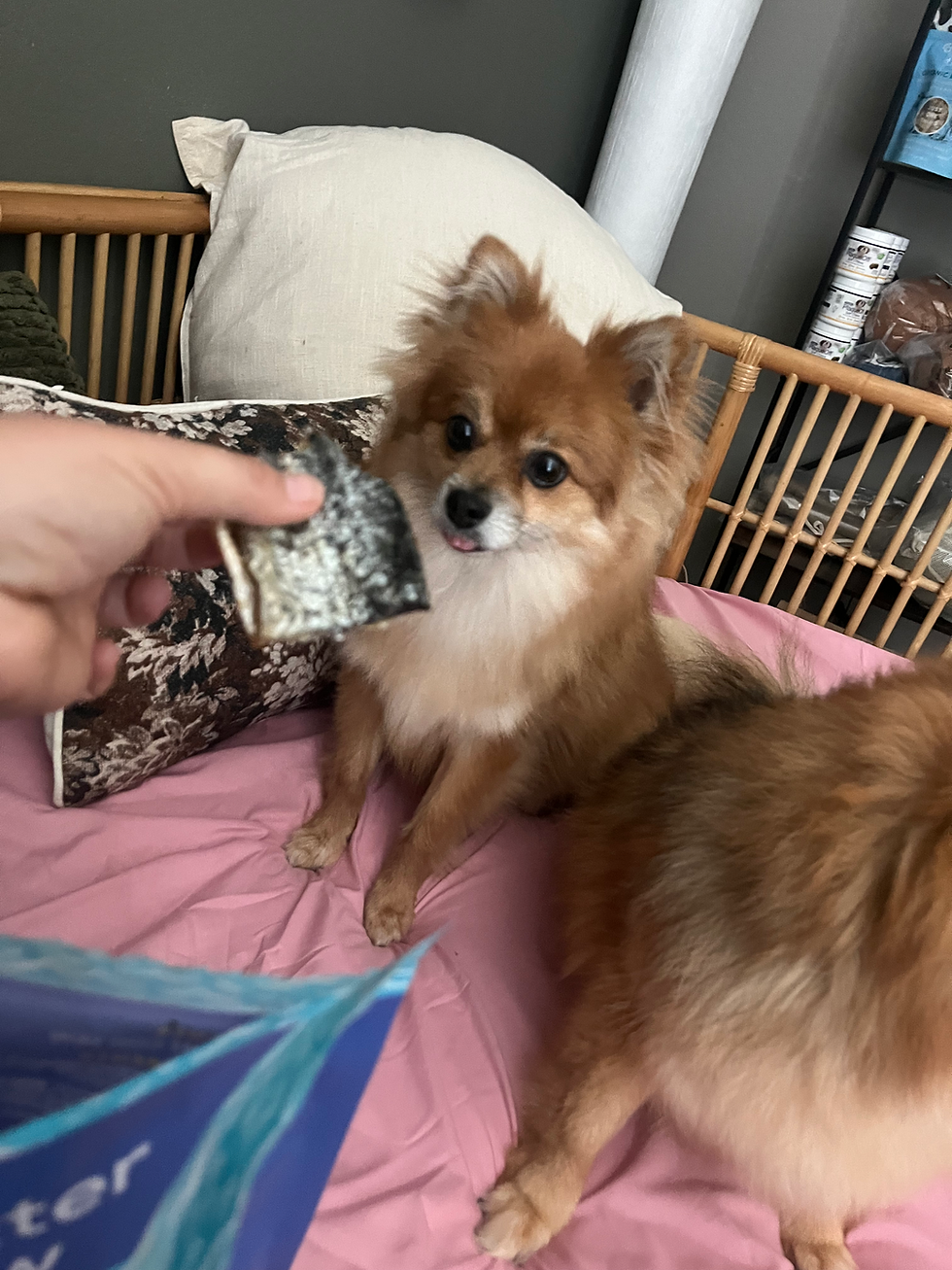
🐕 Mozzi is the minimalist. She’ll grab a few bites of kibble, walk just a couple of feet away from her bowl, gently drop it on the floor, and eat it there like it’s her preferred “dining spot.” Clean, simple, and consistent.
🐶 MJ, on the other hand, fully commits. She’ll grab a mouthful of food and proudly carry it all the way to the couch like she’s relocating to her own private restaurant. Once she gets there, she settles in like she booked a reservation.
Same instinct. Totally different execution.
And honestly, once you notice it, you start realizing how many dogs have their own unique version of this behavior.
⚠️ When caching might be something to watch
Most of the time, caching is completely harmless.
However, it may be worth paying attention if you notice:
Sudden changes in eating behavior
Signs of anxiety around food
Aggressive guarding of food or space
Weight loss or refusal to eat normally
Excessive or obsessive food movement
If any of those appear, it’s worth checking in with a vet just to rule out stress or medical issues.
🐾 Should you stop caching behavior?
In most cases, no—you don’t need to stop it.
Caching is:
Natural
Instinctual
Usually harmless
But if it becomes messy or you’d like to gently manage it, you can try:
Feeding in a calmer, quieter space
Using puzzle feeders or slow feeders
Keeping a consistent feeding routine
Separating pets during mealtime if needed
💡 Final thoughts
Dogs don’t always interact with food the way we expect them to.
Some eat directly from the bowl. Some turn it into a game. And some - like Mozzi and MJ - decide the bowl is just the starting point of the meal.
Caching might look unusual, but at its core, it’s just another glimpse into your dog’s instincts still showing up in everyday life.
Comments